
If you’ve ever stared at your reflection, willing your patchy stubble to fill in, you’ve probably asked: How fast does facial hair grow? The answer isn’t one-size-fits-all—genetics, hormones, age, and even your overall health play huge roles. But on average, facial hair grows about 0.3 to 0.5 millimeters per day, which translates to roughly 1 to 1.5 centimeters (0.4 to 0.6 inches) per month. That’s about half an inch every 30 days, though some men see faster or slower growth depending on their biology.
This guide breaks down the science behind facial hair growth, what’s considered normal, and why your beard might seem to grow at a snail’s pace compared to your friend’s. We’ll also cover when slow or uneven growth might signal a health issue worth discussing with a doctor.
Reviewed by: DoctorCare Medical Team
Last Updated: March 2026
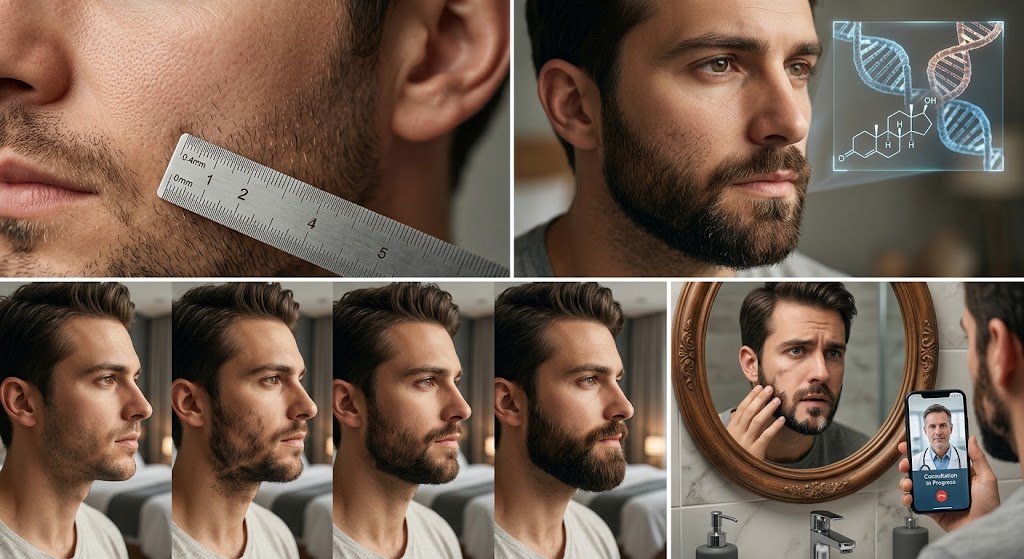
1. The Average Facial Hair Growth Rate
Facial hair, like all body hair, follows a growth cycle with three phases: anagen (growth), catagen (transition), and telogen (resting). The anagen phase determines how long your hair can grow before it falls out and is replaced.
For facial hair:
- Average growth rate: 0.3–0.5 mm per day (about 0.12–0.2 inches per day).
- Monthly growth: 1–1.5 cm (0.4–0.6 inches).
- Annual growth: 12–18 cm (4.7–7 inches) if left completely untouched.
However, not all facial hair grows at the same speed. The cheeks and neck often grow slower than the chin and mustache area, which is why many men notice patchy growth in the early stages of growing a beard.
2. Why Growth Speeds Vary So Much
If your beard seems to grow at a glacial pace while your friend’s looks like it’s on fast-forward, several factors are likely at play:
Genetics
Your DNA is the biggest influencer. If the men in your family have thick, fast-growing beards, you’re more likely to as well. Genetic factors determine:
- Hair follicle sensitivity to hormones like testosterone and DHT (dihydrotestosterone).
- The density and distribution of hair follicles on your face.
- The length of your hair’s anagen phase (longer phase = longer potential growth).
Hormones
Testosterone and DHT are the primary hormones that stimulate facial hair growth. Higher levels of these hormones often lead to:
- Faster growth rates.
- Thicker, coarser hair.
- Earlier onset of beard growth (though timing varies widely—some men start growing facial hair in their teens, while others don’t see significant growth until their 20s or even 30s).
Low testosterone or hormonal imbalances (like those caused by thyroid issues or polycystic ovary syndrome in rare cases) can slow growth or lead to patchy beards.
Age
Facial hair growth typically follows this timeline:
- Puberty (12–16 years): First signs of facial hair, often starting with a mustache or sideburns.
- Late teens to early 20s: Beard fills in, but growth may still be uneven.
- Mid-20s to 30s: Peak growth rate for most men.
- 40s and beyond: Growth may slow slightly due to hormonal changes, but beards often continue to thicken with age.
Nutrition and Health
Your beard needs protein, vitamins (A, C, D, E, B-complex), minerals (zinc, iron, magnesium), and healthy fats to grow at its full potential. Poor diet, dehydration, or chronic stress can:
- Slow growth rates.
- Weaken hair strands, leading to breakage.
- Cause dryness or brittleness.
Ethnicity
Studies suggest that facial hair growth rates can vary slightly by ethnicity, though genetics and individual biology play a larger role. For example:
- Men of Middle Eastern, Mediterranean, or South Asian descent often have thicker, faster-growing beards.
- Men of East Asian descent may have slower or less dense facial hair growth due to lower sensitivity to DHT.
Skin and Follicle Health
Conditions like acne, eczema, or psoriasis can damage hair follicles and slow growth. If you’re concerned about skin issues affecting your beard, consulting an online dermatologist can help address underlying problems.
3. Facial Hair Growth Stages: What to Expect
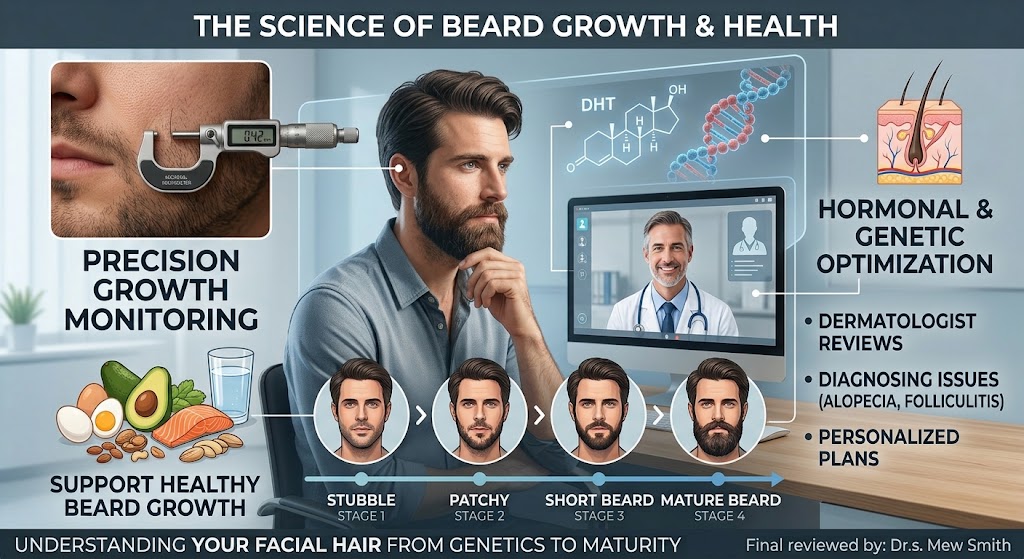
Growing a beard isn’t just about waiting—it’s about understanding the stages your facial hair goes through. Here’s what to expect as your beard develops:
Stage 1: The Stubble Phase (1–2 weeks)
- Hair starts to emerge as short, coarse stubble.
- Growth rate: ~0.3 mm/day.
- Patchy areas are common, especially on the cheeks.
Stage 2: The Patchy Phase (2–4 weeks)
- Hair grows longer (up to 5–10 mm).
- Some areas (chin, mustache) fill in faster than others (cheeks, neck).
- Itchiness is common as hair curls back into the skin.
Stage 3: The Short Beard Phase (1–3 months)
- Hair reaches 1–3 cm in length.
- Growth becomes more noticeable, but patchiness may still persist.
- Daily grooming (trimming, moisturizing) becomes important.
Stage 4: The Full Beard Phase (3–6 months)
- Hair can grow 3–7 cm or longer.
- Most men see their beard’s true pattern and density by this stage.
- Growth rate may slow slightly as hair reaches its genetic length limit.
Stage 5: The Mature Beard (6+ months)
- Hair reaches its maximum length (often 10–15 cm or more).
- Growth rate stabilizes at ~0.3–0.5 mm/day.
- Regular maintenance (trimming, oiling) keeps it looking healthy.
4. Does Shaving Make Facial Hair Grow Faster?
No. This is one of the most persistent myths about facial hair. Shaving does not affect the rate or thickness of your beard growth. Here’s why:
- Hair grows from the follicle, not the tip. Cutting the hair at the skin’s surface doesn’t change what’s happening below.
- Shaving can make hair feel coarser because it cuts the tapered end, leaving a blunt tip. But it doesn’t make hair grow back thicker or faster.
- Frequent shaving can cause irritation, ingrown hairs, or razor burn, which might temporarily affect skin health—but not growth speed.
If you’re curious about how often you should shave or trim for a healthy beard, a general practitioner online or dermatologist can offer personalized advice.
5. How to Support Healthy Facial Hair Growth
While you can’t change your genetics, you can optimize your beard’s growth potential with these habits:
Eat a Balanced Diet
Focus on foods rich in:
- Protein: Eggs, lean meats, beans, and nuts (hair is made of keratin, a protein).
- Zinc: Oysters, pumpkin seeds, lentils, and beef (supports hair follicle health).
- Vitamin D: Fatty fish, fortified dairy, and sunlight exposure.
- B vitamins: Whole grains, leafy greens, and eggs (help with energy and hair growth).
- Healthy fats: Avocados, nuts, and olive oil (support hormone production).
Stay Hydrated
Dehydration can make hair brittle and slow growth. Aim for 2–3 liters of water daily.
Get Enough Sleep
During deep sleep, your body repairs and regenerates tissues, including hair follicles. Aim for 7–9 hours per night.
Manage Stress
Chronic stress raises cortisol levels, which can disrupt hair growth cycles. Try:
- Exercise (even light activity like walking).
- Meditation or deep breathing.
- Adequate rest.
Avoid Smoking and Excessive Alcohol
Both can:
- Reduce blood flow to hair follicles.
- Deplete nutrients like vitamin C and zinc.
- Increase oxidative stress, which damages hair cells.
Groom Gently
- Wash your beard 2–3 times a week with a mild cleanser to avoid stripping natural oils.
- Use a beard oil or balm to moisturize the skin and hair, reducing itchiness and breakage.
- Avoid over-washing, which can dry out your skin and hair.
Be Patient
Facial hair growth is a marathon, not a sprint. Most men don’t see a full, thick beard until their late 20s or early 30s. Consistency is key!
6. When to See a Doctor About Your Facial Hair
While slow or patchy growth is often normal, consult a healthcare provider if you notice:
No Facial Hair by Age 25–30
If you’re in your late 20s or early 30s with no signs of facial hair growth (and no family history of late beard development), it could indicate:
- Low testosterone (hypogonadism).
- Hormonal imbalances (e.g., thyroid disorders).
- Genetic conditions like alopecia areata or androgen insensitivity syndrome.
A general practitioner can run blood tests to check hormone levels and rule out underlying issues.
Sudden Hair Loss or Thinning
If you’ve had a beard for years and suddenly notice:
- Bald patches in your beard.
- Excessive shedding (more than 100 hairs per day).
- Redness, itching, or scaling on the skin beneath your beard.
...it could signal: - Alopecia areata (an autoimmune condition).
- Fungal or bacterial infections (like ringworm or folliculitis).
- Nutritional deficiencies (e.g., iron, zinc, or vitamin D).
An online dermatologist can diagnose skin or hair conditions remotely.
Painful or Inflamed Hair Follicles
If your beard area is:
- Red, swollen, or tender.
- Oozing pus or fluid.
- Extremely itchy or burning.
...you may have folliculitis (inflammation of the hair follicles) or a staph infection. These often require antibiotics.
Unexplained Changes in Growth Pattern
If your beard starts growing in new, unusual areas (e.g., sudden thick growth on the neck or cheeks where there was none before), it could be due to:
- Hormonal fluctuations (e.g., from medications or tumors).
- Polycystic ovary syndrome (PCOS) in rare cases (though this typically affects women).
For men’s health concerns, including hormonal imbalances, a men’s health online doctor can provide guidance.
7. Frequently Asked Questions
How fast does a beard grow in a week?
On average, facial hair grows 2–3.5 mm (0.08–0.14 inches) per week. However, this varies by individual and beard area.
Does facial hair grow faster at night?
No. Hair grows continuously, but sleep supports overall health, which indirectly helps hair growth. There’s no evidence that it grows faster at night.
Why does my beard grow faster on one side?
This is completely normal and usually due to:
- Asymmetrical follicle sensitivity to hormones.
- Genetic variations in hair density on each side of the face.
- Different blood flow to each side (e.g., if you sleep on one side more often).
Can I speed up my beard growth naturally?
You can support healthy growth with good nutrition, hydration, and sleep, but you cannot significantly speed up your genetic growth rate. Supplements like biotin or collagen may help if you have deficiencies, but they won’t override your DNA.
Why is my beard growing so slowly?
Slow growth is usually due to:
- Genetics (the biggest factor).
- Low testosterone or DHT levels.
- Poor nutrition or hydration.
- Chronic stress or illness.
- Age (growth slows slightly with age).
If you’re concerned, a talk to a doctor online can help identify potential causes.
Does exercise affect beard growth?
Moderate exercise supports beard growth by:
- Improving blood circulation (delivering nutrients to follicles).
- Reducing stress (lower cortisol = better hair growth).
- Boosting testosterone (in some cases).
However, excessive exercise (e.g., overtraining) can increase cortisol and hinder growth. Balance is key!
Can women grow facial hair?
Yes, but it’s usually fine, light hair (vellus hair). Thick facial hair in women can be due to:
- Genetics (some families have more prominent hair).
- Hormonal imbalances (e.g., PCOS, high testosterone).
- Medications (e.g., certain steroids).
If a woman notices sudden, coarse facial hair growth, it’s worth discussing with a doctor.
8. Final Thoughts
So, how fast does facial hair grow? On average, 0.3–0.5 mm per day, or about 1–1.5 cm per month. But your personal rate depends on genetics, hormones, age, health, and even your ethnicity.
If your beard isn’t growing as fast or as thick as you’d like, focus on what you can control: nutrition, hydration, sleep, stress management, and gentle grooming. And remember—patience is key. Most beards take 3–6 months to show their true potential.
If you’re concerned about slow growth, patchiness, or sudden changes, don’t hesitate to talk to a doctor online. A general practitioner or dermatologist can help rule out underlying issues and offer personalized advice.
Reviewed by: DoctorCare Medical Team
Last Updated: March 2026
DoctorCareOnline provides online consultations for non-emergency healthcare needs. This article is for informational purposes only and does not constitute medical advice or diagnosis. Always consult a qualified healthcare professional with any questions or concerns about your health or beard growth.