
If you have ever had a urinary tract infection (UTI), you already know how miserable it can be. The burning sensation, the constant feeling that you need to run to the bathroom, the pelvic pressure, and the sheer exhaustion can drain your energy in a matter of hours.
But life doesn’t just pause when you get sick. You might still have to commute to work, pick up your kids from school, or drive to the pharmacy to get painkillers.
This brings up a very practical, everyday question: Is it safe to mix a UTI and driving?
The short answer is: It depends on your symptoms. While there is no specific law saying you can’t drive with a bladder infection, getting behind the wheel when you are in pain, distracted, or taking certain medications can be incredibly dangerous.
In this guide, we are going to break down exactly how a UTI affects your ability to drive safely, which warning signs mean you should hand over the car keys, and how you can get fast medical help from your couch without having to drive anywhere at all.
Reviewed by: DoctorCare Medical Team
Last Updated: March 2026
1. The Real Danger of UTI Symptoms on the Road
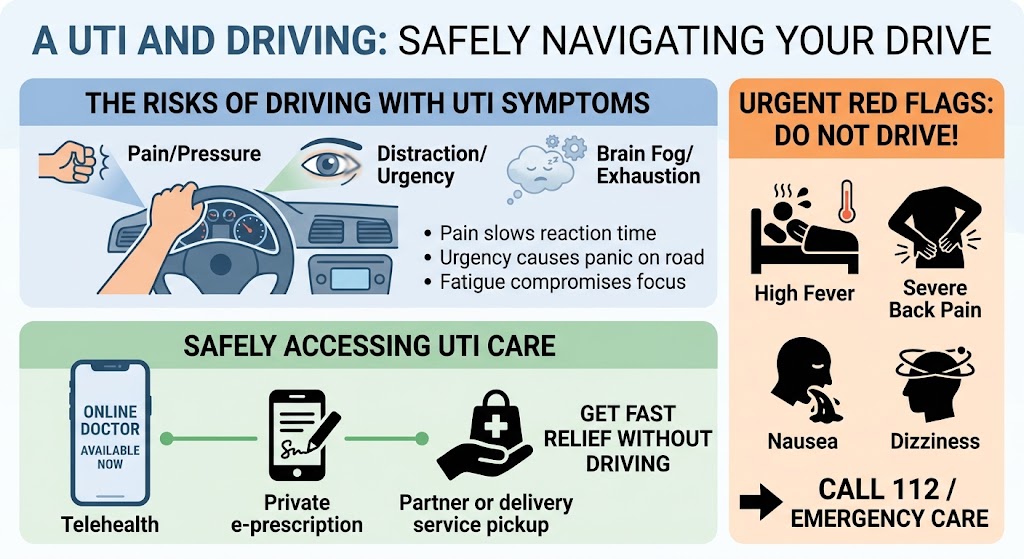
Driving requires 100% of your focus. When you have a UTI, your body is actively fighting an infection, which takes a massive toll on your physical and mental energy. Here is how standard UTI symptoms can secretly ruin your driving ability:
The Distraction of "Urgency"
Imagine cruising down a busy highway when your bladder suddenly spasms, making you feel like you are going to have an accident right there in the driver’s seat. That sudden, intense urgency causes panic. You might start speeding, making erratic lane changes, or losing focus on the cars around you just to find the nearest restroom.
Pain and Reaction Times
Severe burning or cramping in your lower abdomen makes it hard to sit comfortably. When you are in pain, your brain is distracted. Studies show that acute pain can actually slow down your reaction times, meaning you might not brake as quickly if the car in front of you suddenly stops.
Fatigue and Brain Fog
Your immune system is working overtime. Even without a high fever, a UTI can leave you feeling drained, shaky, and dealing with "brain fog." Driving while exhausted is just as dangerous as driving under the influence.
2. Can UTI Medications Make You Unsafe to Drive?
Sometimes, the treatment affects your driving more than the infection itself. Before you start the engine, you need to know exactly what you just swallowed.
- Antibiotics: Standard UTI antibiotics don't usually cause drowsiness, but they can cause nausea, dizziness, or an upset stomach in some people.
- Painkillers: If you are taking standard paracetamol or ibuprofen, you are generally safe to drive. However, if a doctor has prescribed stronger painkillers (like those containing codeine) to manage severe cramping, do not drive. They can cause extreme drowsiness and slow your reflexes.
- Bladder Antispasmodics: Medications designed to stop bladder spasms can cause blurry vision, dry mouth, and dizziness.
Golden Rule: Always read the leaflet inside your medication box. If it warns that the medicine may cause drowsiness or advises against operating heavy machinery, stay away from your car.
3. Red Flags: When You Absolutely Should Not Drive
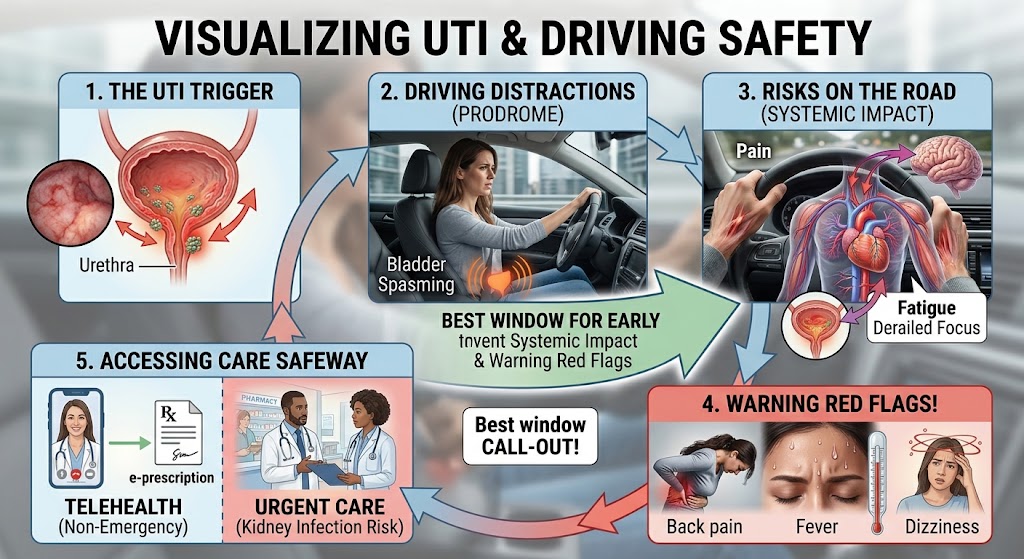
A simple bladder infection can sometimes travel up into your kidneys, turning into a much more serious condition called pyelonephritis. If you experience any of the following red flags, your body is telling you to stop. Do not drive.
- A high fever, sweating, or shaking chills
- Deep pain in your lower back or sides (flank pain)
- Nausea or vomiting
- Severe dizziness, confusion, or feeling faint
If you have these symptoms, you need medical care immediately, but you should not be the one driving. Ask a friend, call a taxi, or use a rideshare app. In severe cases where you feel confused or cannot keep fluids down, call emergency services (112 in Europe).
4. The Smart Alternative: Don't Drive, See an Online GP
Why force yourself to drive to a waiting room when you feel terrible? The safest approach to UTI and driving is simply to take driving out of the equation entirely.
Telemedicine has completely changed how we treat uncomplicated UTIs. Through a private online GP appointment, a licensed doctor can evaluate your symptoms over a video or phone call.
If they determine you have a standard UTI, they can issue a private e-prescription directly to your smartphone. You can then ask a partner, friend, or delivery service to pick up the antibiotics from the pharmacy for you.
Where to get online care today:
- DoctorCareOnline: You can easily book an appointment with an English-speaking doctor in Spain.
- HealthClino: Explore comprehensive European telehealth options at HealthClino.com or HealthClino.eu.
- GPCarely: Another excellent platform for rapid virtual care is GPCarely.
If you need a sick note for work so you can stay in bed, an online doctor can also help you with a private online medical certificate.
5. When You Actually Need to Visit a Local Clinic
While online doctors are fantastic for routine UTIs, there are times when a physical examination or a urine culture is absolutely necessary. You should seek in-person care if:
- You are pregnant.
- You are male (UTIs in men are less common and often require physical investigation).
- Your symptoms haven't improved after 48 hours of antibiotics.
- You are seeing blood in your urine alongside feeling very unwell.
If you are in Spain and need to find a physical clinic quickly without driving too far, you can use these resources to locate a general practitioner near me in Spain or an urgent care center near me in Spain.
6. Practical Tips if You Have No Choice But to Drive
We understand the real world. Sometimes, you live alone and absolutely must drive yourself to the pharmacy. If your symptoms are mild, you have no fever, and you must drive, follow these safety tips:
- Keep it short: Only drive for essential, short trips. Now is not the time for a road trip.
- Empty your bladder first: Go to the bathroom right before you grab your keys to minimize urgency on the road.
- Wear loose clothing: Tight jeans or belts will put unnecessary pressure on your inflamed bladder.
- Stay hydrated: It sounds counterintuitive when you want to avoid peeing, but highly concentrated urine irritates the bladder lining even more, increasing pain.
- Pull over if you panic: If a bladder spasm hits you hard, put your hazard lights on and pull over safely. Do not try to speed home.
7. Frequently Asked Questions (FAQs)
Can I drive safely while taking UTI antibiotics?
Usually, yes. Standard antibiotics don't typically impair driving. However, monitor how your body reacts to the first dose. If it makes you dizzy or nauseous, stay off the road.
Does cranberry juice cure a UTI so I can drive sooner?
No. While cranberry supplements might help prevent future UTIs, they cannot cure an active bacterial infection. You need a proper medical assessment and likely antibiotics.
Is a UTI contagious to my family members in the car?
No. UTIs are caused by your own bacteria entering the urinary tract; they are not airborne. Patients often ask us about contagion for various illnesses. For example, if you are wondering about respiratory viruses, you can read Is mono contagious through the air?.
Are UTIs related to autoimmune diseases?
A UTI is a bacterial infection, not an autoimmune condition. However, people with weakened immune systems may get them more frequently. (If you are researching autoimmune conditions, you might find our partner article Is psoriasis an autoimmune disease? helpful).
Can I get an online doctor to treat my UTI?
Yes! A general practitioner online can safely assess uncomplicated UTIs and issue a receta electrónica online in Spain (or a private e-prescription anywhere in Europe).
For more context on navigating driving and urinary health, you can also check out this dedicated resource on UTI and driving.
8. Next Steps for Fast Relief
When it comes to a UTI and driving, the safest choice is usually to leave the car parked. Your comfort, concentration, and reaction times are compromised when you are in pain and desperate for a bathroom.
Instead of risking your safety on the road, take advantage of modern telehealth. Book a same-day online doctor appointment. You can speak to a friendly, licensed professional from your bed, get your prescription sent directly to your phone, and start feeling like yourself again.
Take care of your body, stay hydrated, and stay safe!
Reviewed by: DoctorCare Medical Team
Last Updated: March 2026
DoctorCareOnline provides online consultations for non-emergency healthcare needs. This article is for informational purposes only and does not constitute medical diagnosis, treatment, or a legal fitness-to-drive certification. Always follow your clinician’s advice and local driving laws. For emergencies, call 112 or use local emergency services immediately.